
In his voice, there’s no collector’s pride, just the quiet certainty that some stories are meant to be preserved with the integrity they deserve.
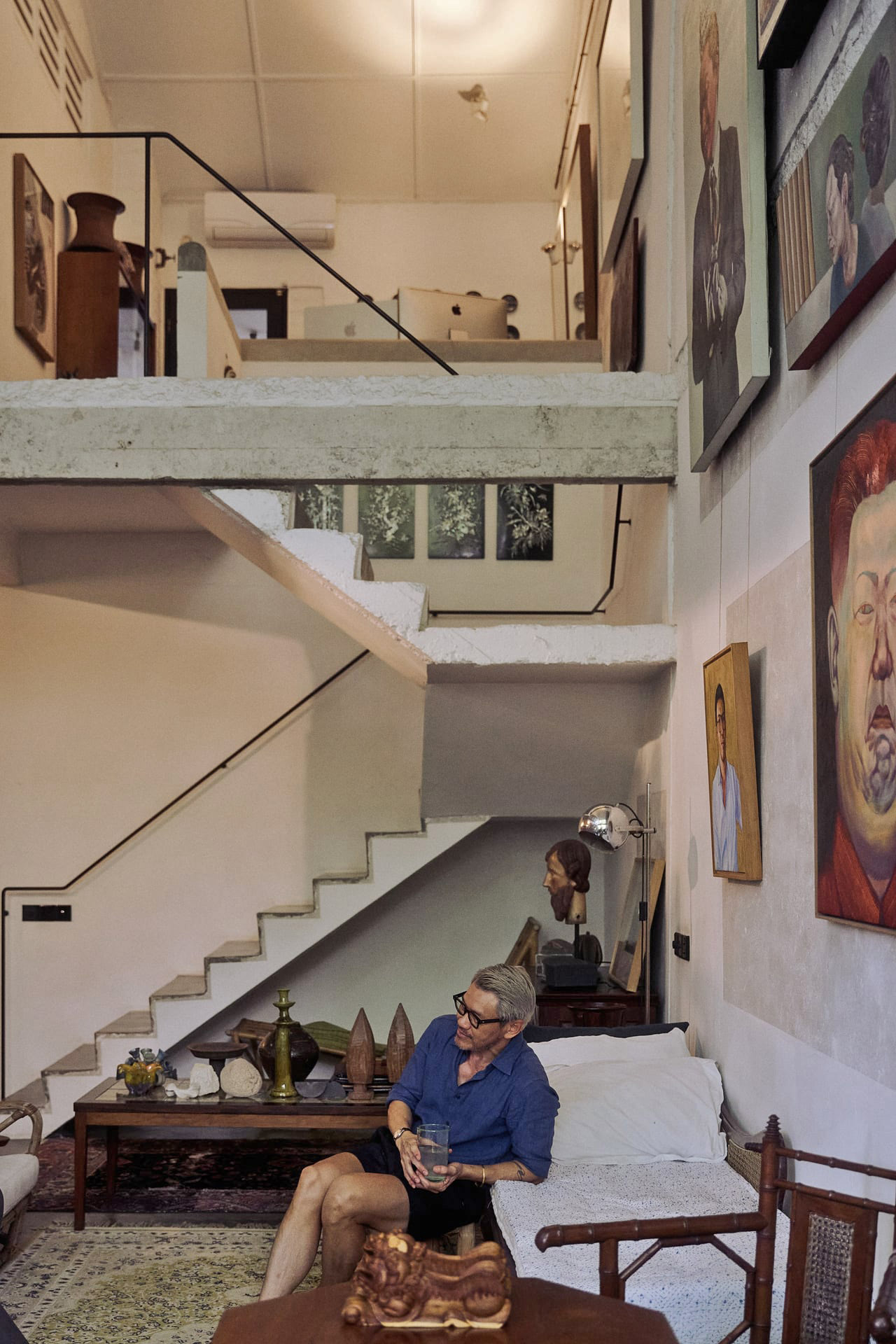
The first thing you notice isn’t the absence of walls. Rather, you feel the house softly exhale.
There is no threshold, no grand entryway to cross. You don’t so much enter Oon Soon’s home as you are absorbed into it, as if the space itself has decided, quite gently, to let you in. Light pours through overhead glass panels that make no apologies for their transparency. There are no curtains, no partitions. Just the filtering green of branches and leaves flirting with the edges of the house, as if nature itself wants in on the conversation.
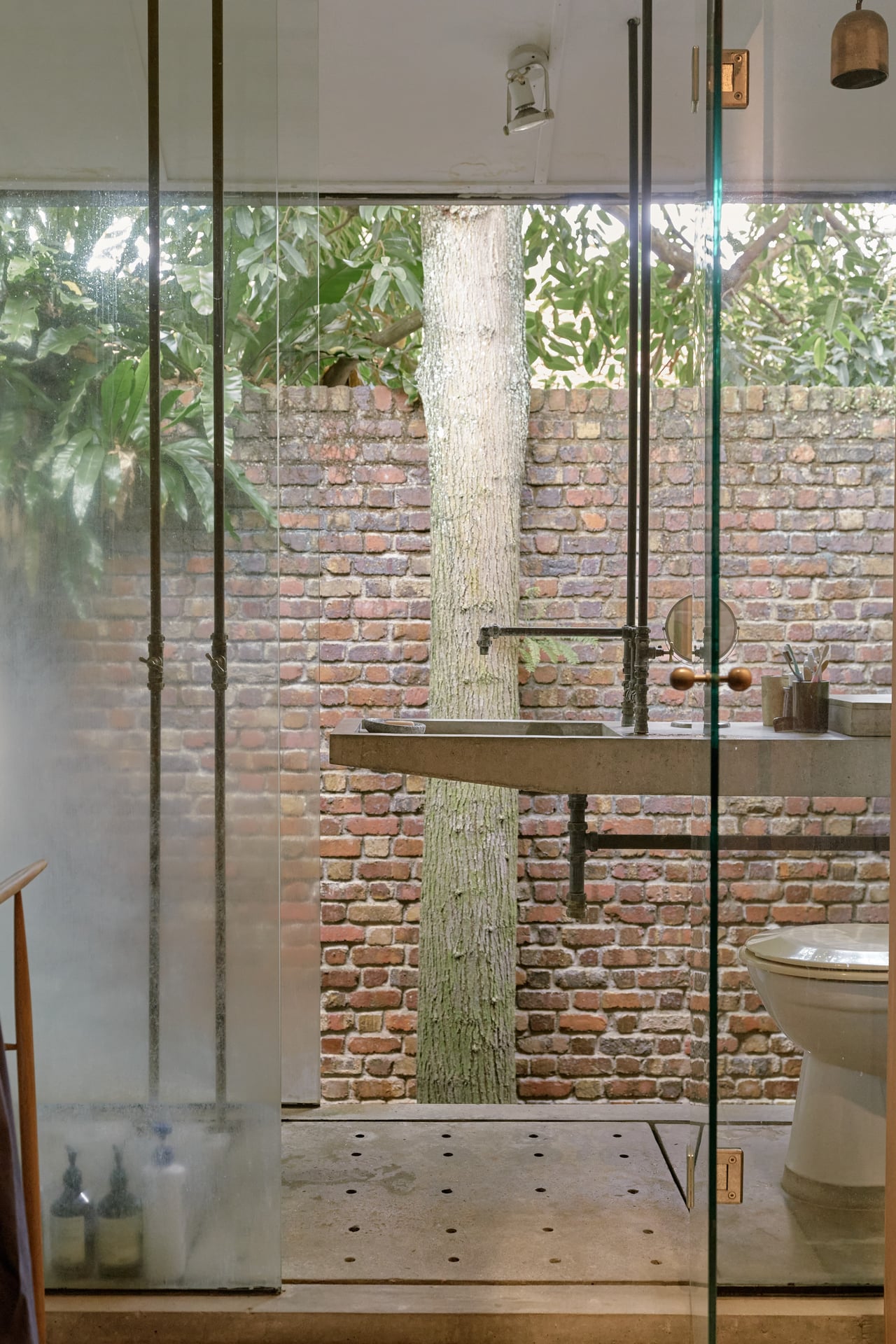
There’s a tree growing inside the house. Not in a planter. Not behind glass. An actual tree that flourishes from the floor, its presence both audacious and strangely inevitable. The bathroom is outdoors, and yet also indoors. The upstairs was once three bedrooms. Now it’s just one. The rest, like much of Oon Soon’s life, has been thoughtfully subtracted.
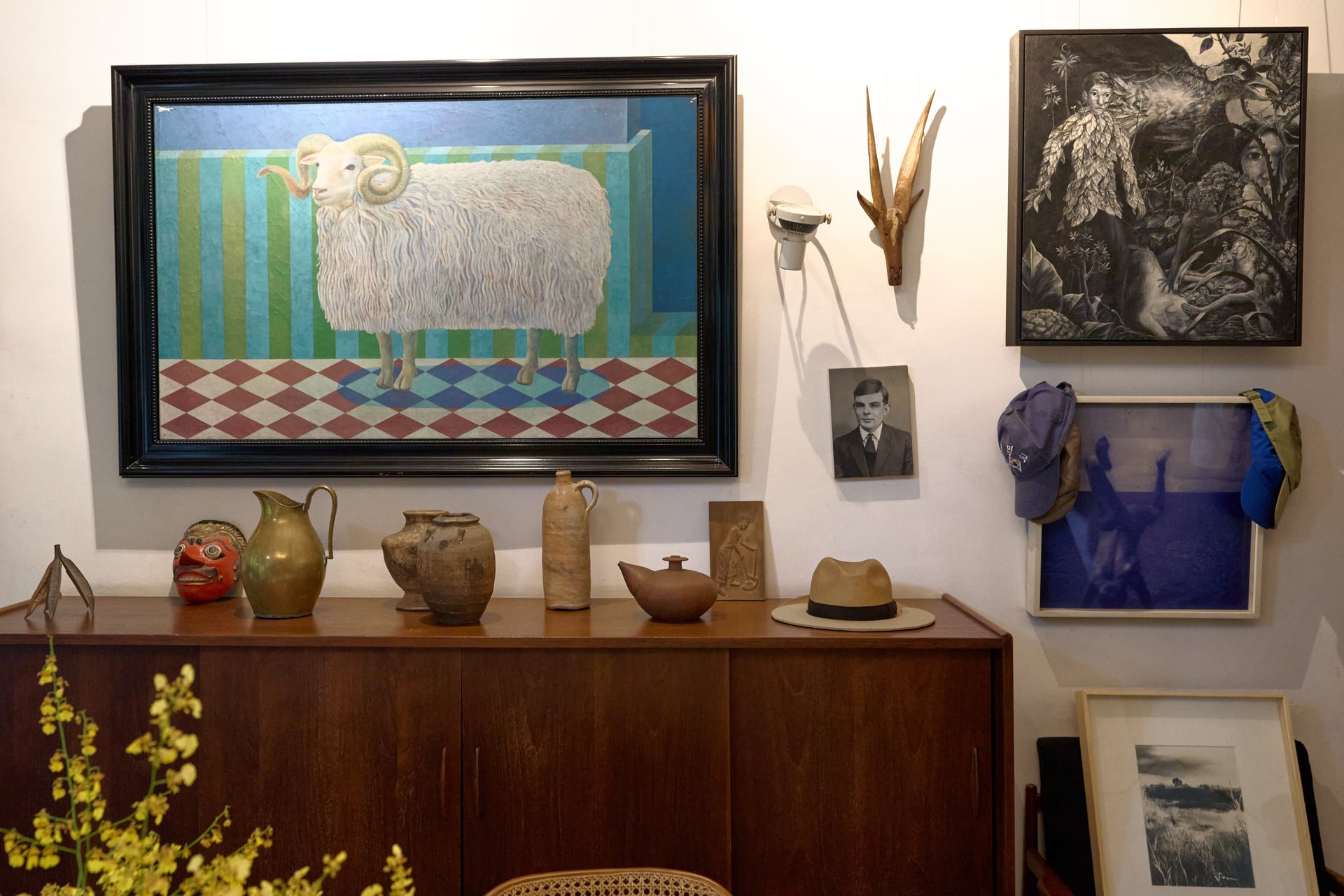
Even the air flows languidly, like it’s been given permission to take its time. And somewhere between the dining and kitchen, a goat-like sculpture watches silently, as if it knows something you don’t.
“I wasn’t sure about this place at first,” he says, perched on a beldi stool, the traditional Moroccan peasant seat worn smooth by time “It was… in disrepair. I couldn’t imagine how anyone could live here.” He doesn’t try to convince you of anything. He simply states it, like someone who has made peace with his own eccentricities. A man who lives without drapes, yet collects life’s fragments with monk-like devotion. A graphic designer who doesn’t care for trends, and a stylist who dresses for dinner at home. A man who insists on light, and listens for vibration.
Oon Soon is difficult to define, just like his house.
He came across the property on a whim, a chance visit. It was dilapidated, possibly once workers’ quarters. But on his way out, he ran into architect Kevin Mark Low, and what might’ve been a brief detour turned into an open-ended architectural collaboration. “Kevin asked if I wanted to buy the house. I said I wasn’t sure. But he said, ‘Get it first. I’ll handle the rest.’” So he did. His only instructions? “Natural light. No walls. Open space.” And that’s exactly what Oon Soon got.
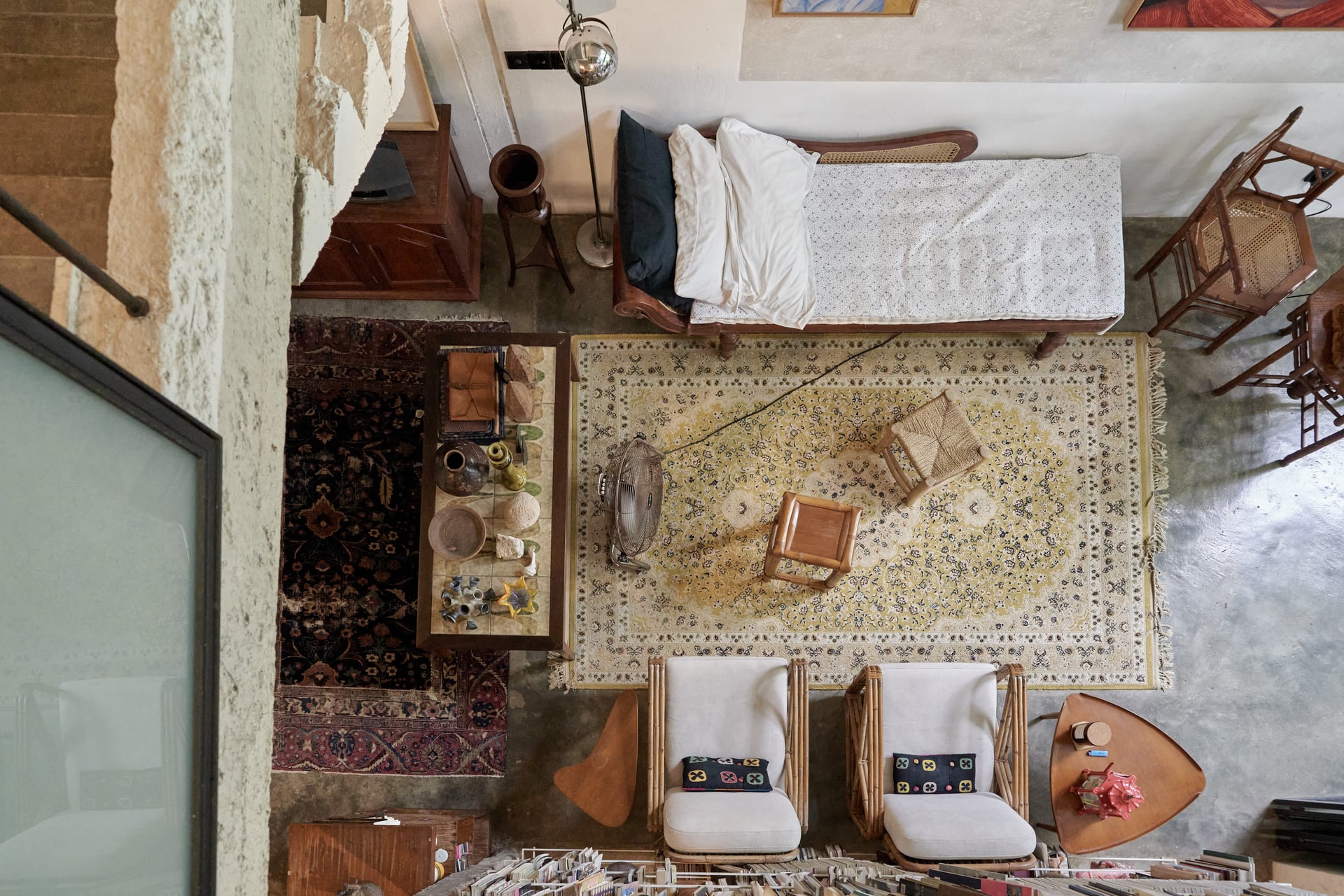
There’s no rigid delineation of rooms, only gentle suggestions of spaces. The house took two to three years to complete. The furniture, a lifetime.
“When I moved into my first house, I only had one chair, a gift from my mother.” Everything else came slowly. A stool acquired for two euros from a man he passed in a Moroccan alleyway. A wooden sculpture from a hill village in Sapa, carved by an old man whose name he doesn’t remember, but whose gesture he recalls vividly. A vessel once used in Javanese tea ceremonies. A vintage shop sign with his name in Chinese. A hundred-year-old figurine, possibly Jesus, possibly St. Francis, whose mystery is part of its meaning.
He remembers them all, like old friends. Each one with its own story of arrival.
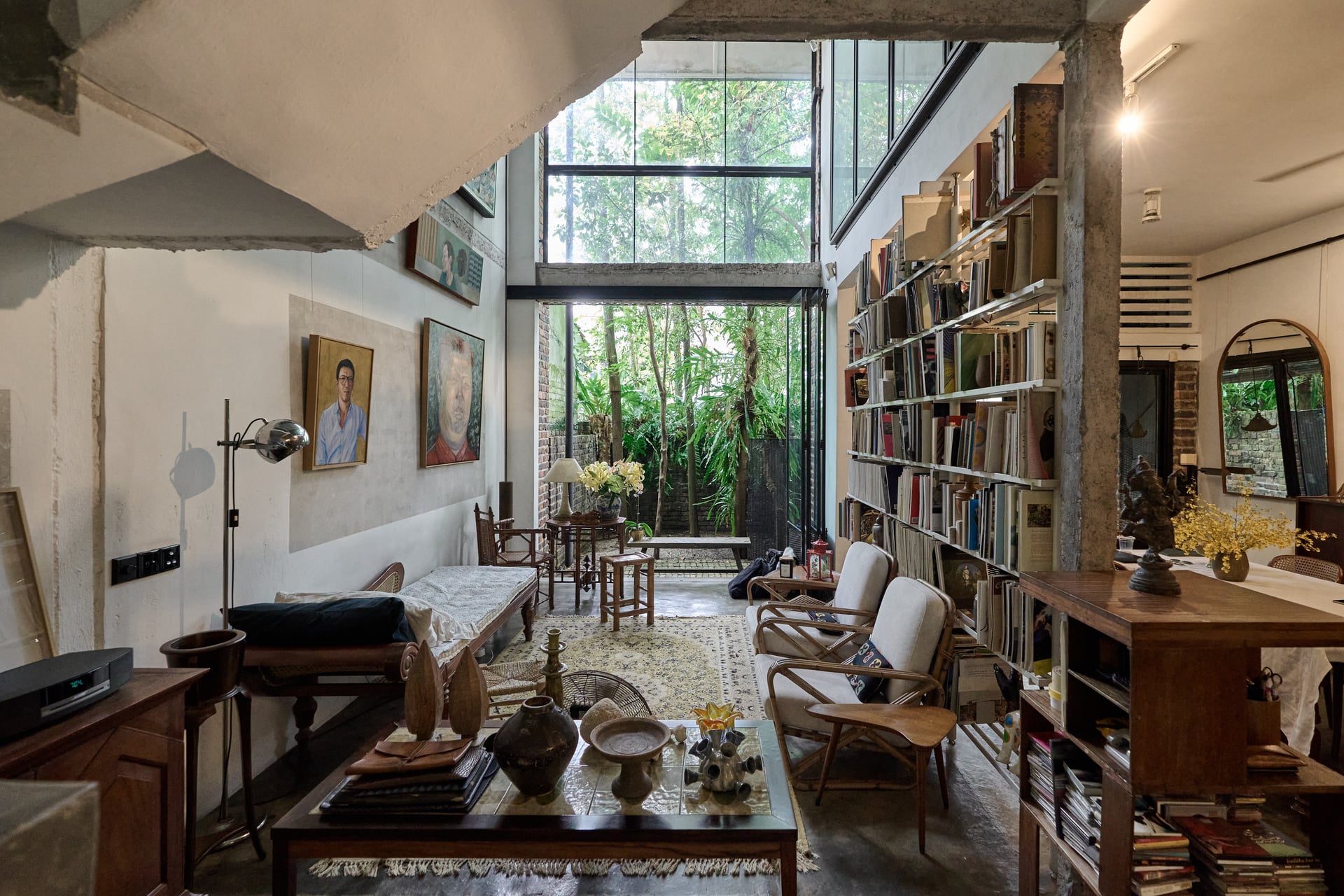
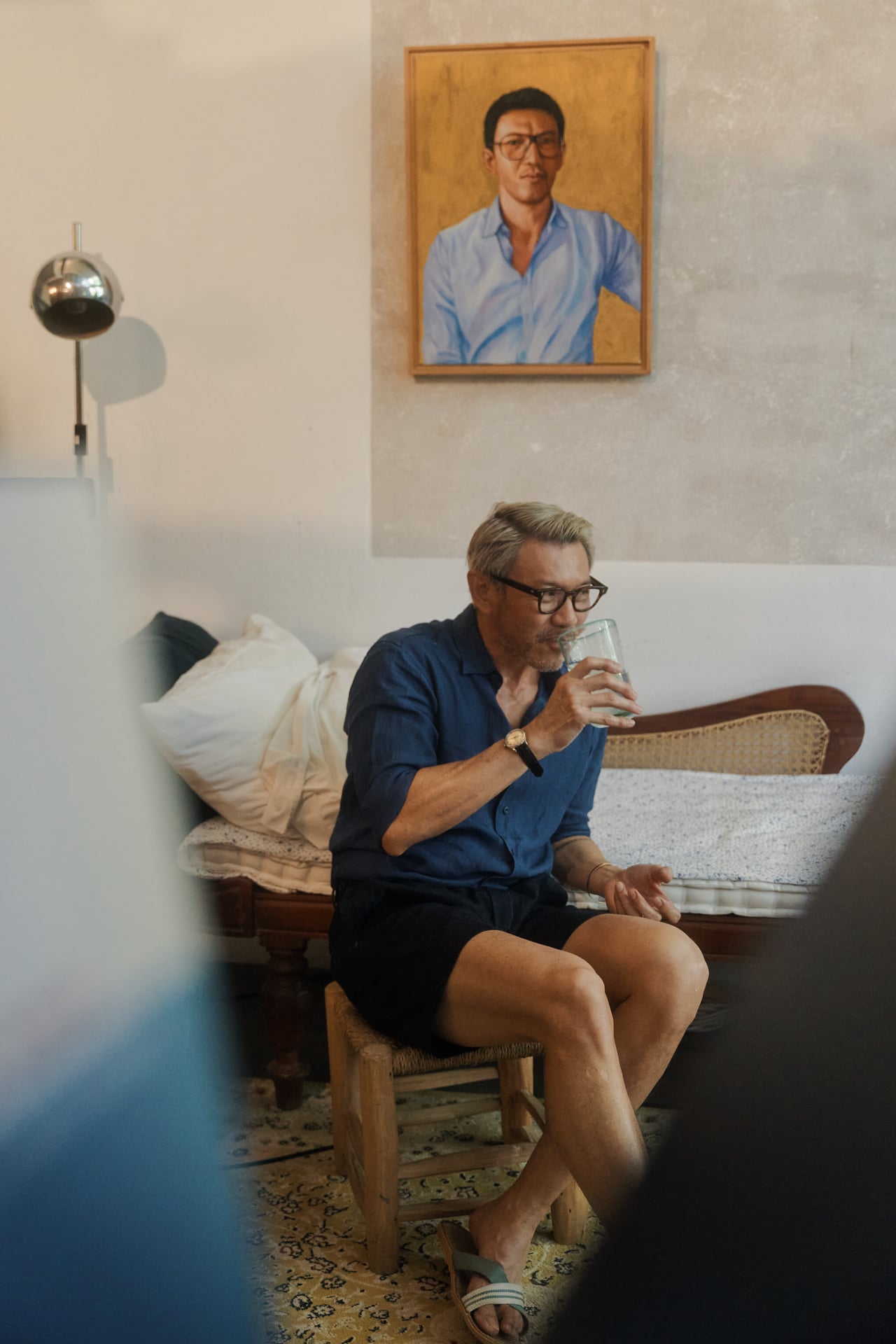
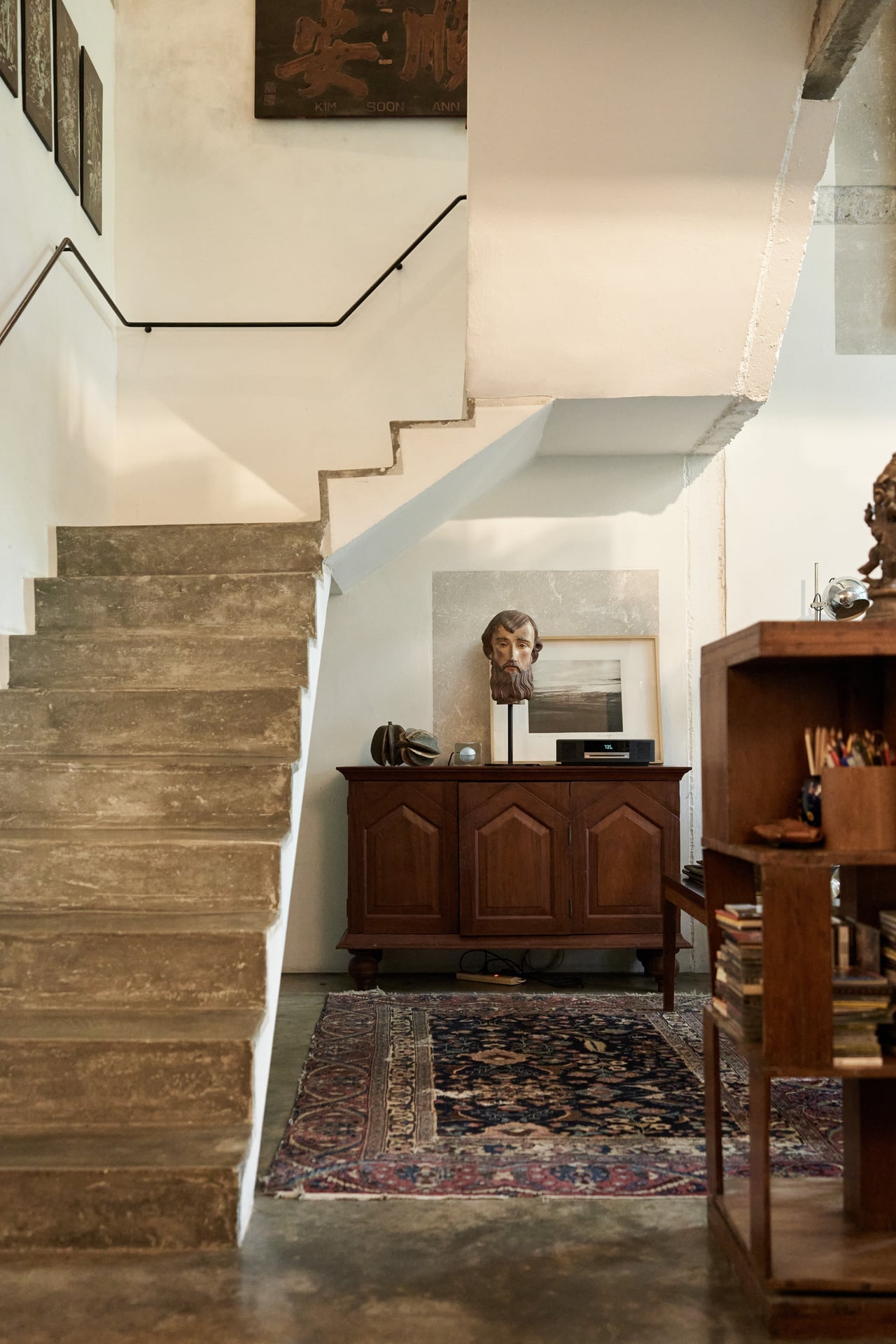
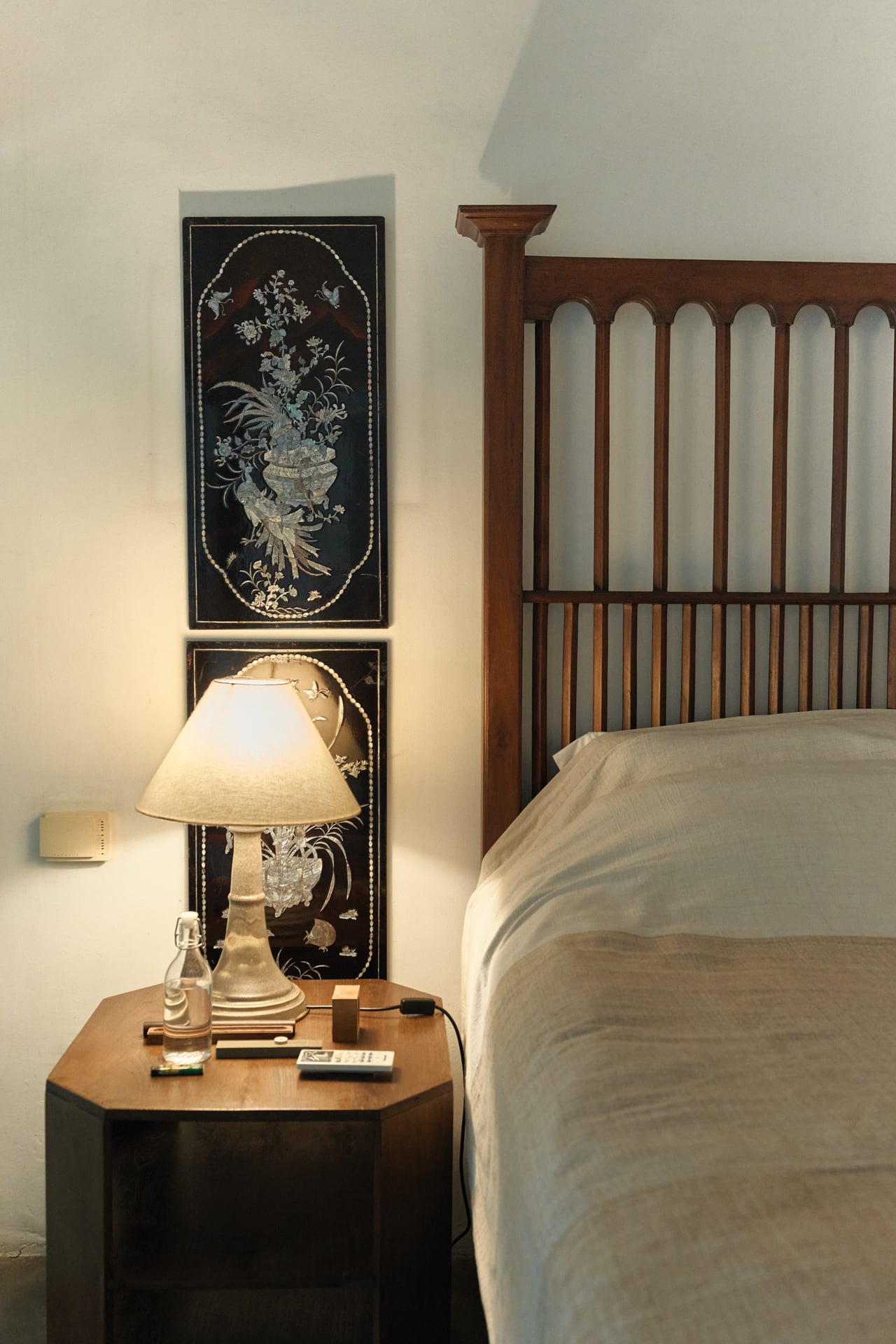
A prototype bed frame designed by Geoffrey Bawa for Lighthouse Galle, unearthed in Sri Lanka, anchors the room with hushed gravity. He recalls with quiet pride, “It came in five parts. Too big for any mattress. I had to get one custom-made.”
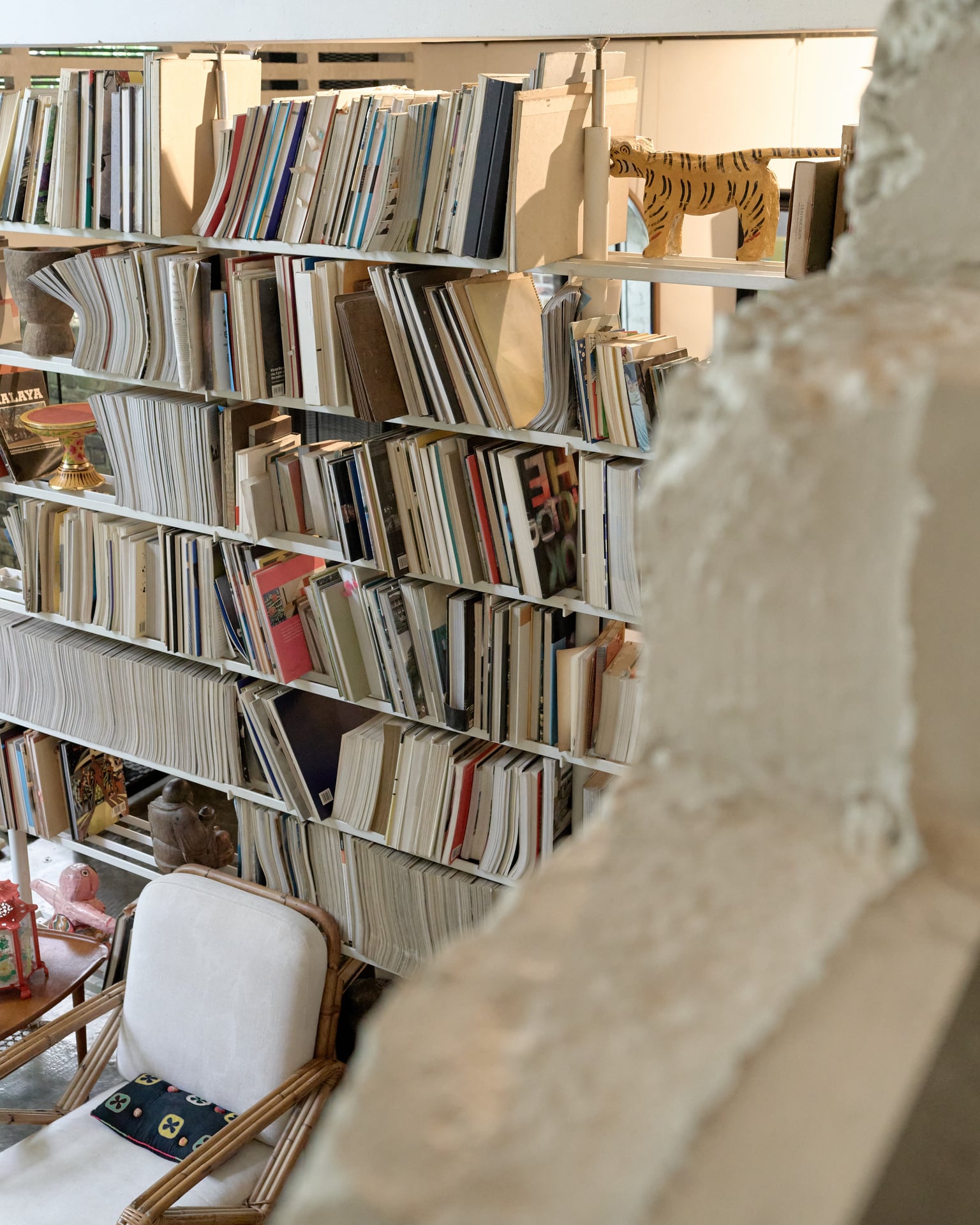
This reverence for the old, for the storied, extends to every corner of the house. A zebra rocking horse. A copper rice cooker. A paper mâché tiger from Myanmar, now standing guard over the living room. “They all had their own lives,” he says. “And now, they live with me.” Even the Block Lamp by Design House Stockholm, a modern classic, sits quietly in the mix, not competing, just belonging.
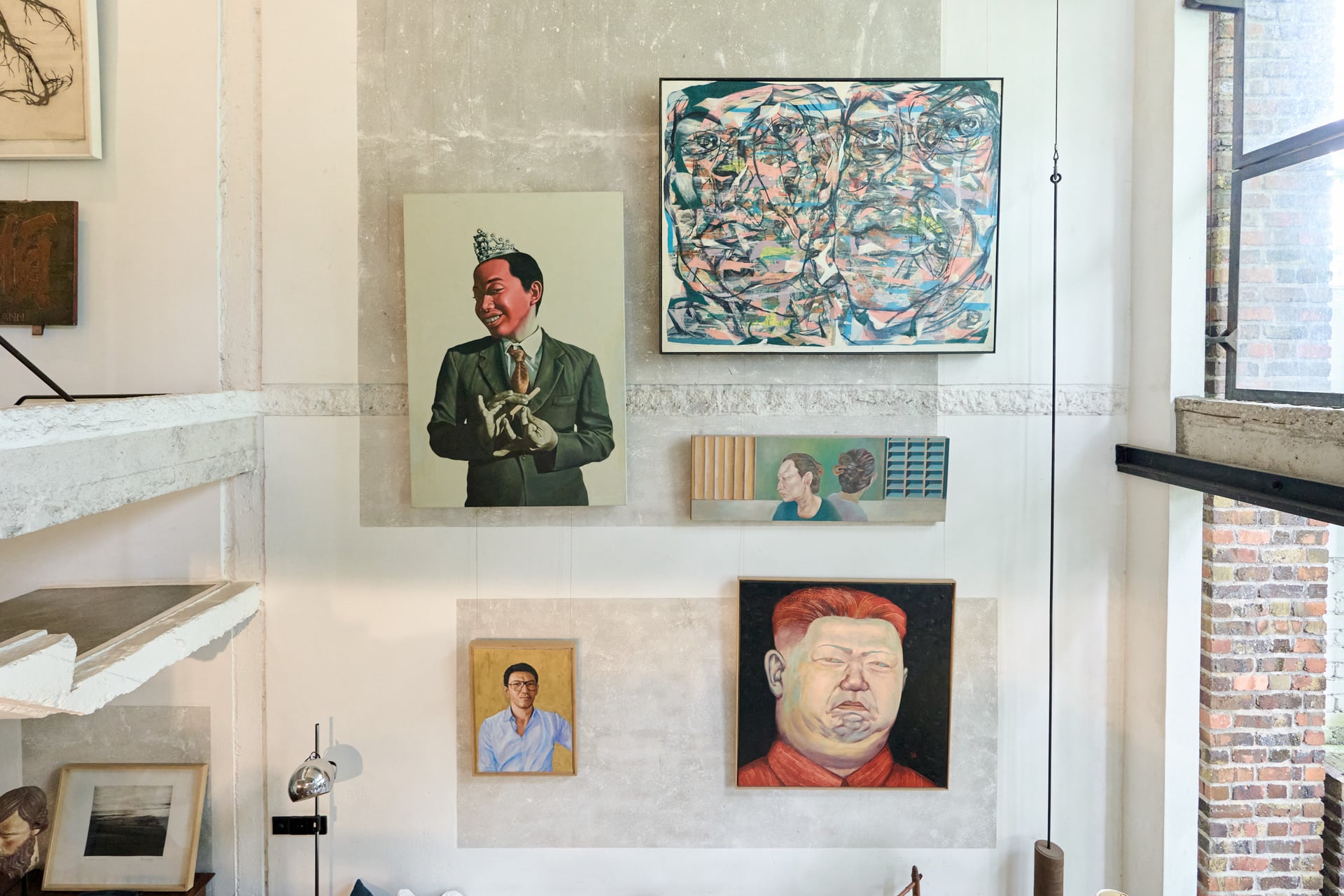
To him, these aren’t possessions. They’re echoes. Many were bartered, gifted, handcarried from villages, markets, and studios. He points to a painting, one of a nearly identical series. “I saw it years ago at an exhibition. I didn’t buy it. But something in it stayed with me. Then, years later, the artist pulled it out of storage. It was the same one. And I bartered for it.”
This kind of serendipitous retrieval seems to happen often to Oon Soon. He’s not mystical about it, just observant. “When I travel, I always bring something back,” he says. “Sometimes I don’t even know where it’ll go. I just know I need to bring it home.”
In the kitchen, chopping boards hang like punctuation marks mid-sentence. We pause here for a drink of water. He reaches for glasses from a cupboard filled with vintage drinkware, delicate, well-loved, and seemingly waiting for conversation.
He speaks in soft bursts, measured, wry, and often trailing into introspection. The silences between sentences aren’t gaps. They are part of the rhythm. He doesn’t over-explain. When he talks about design, it isn’t theory. It’s intimacy.
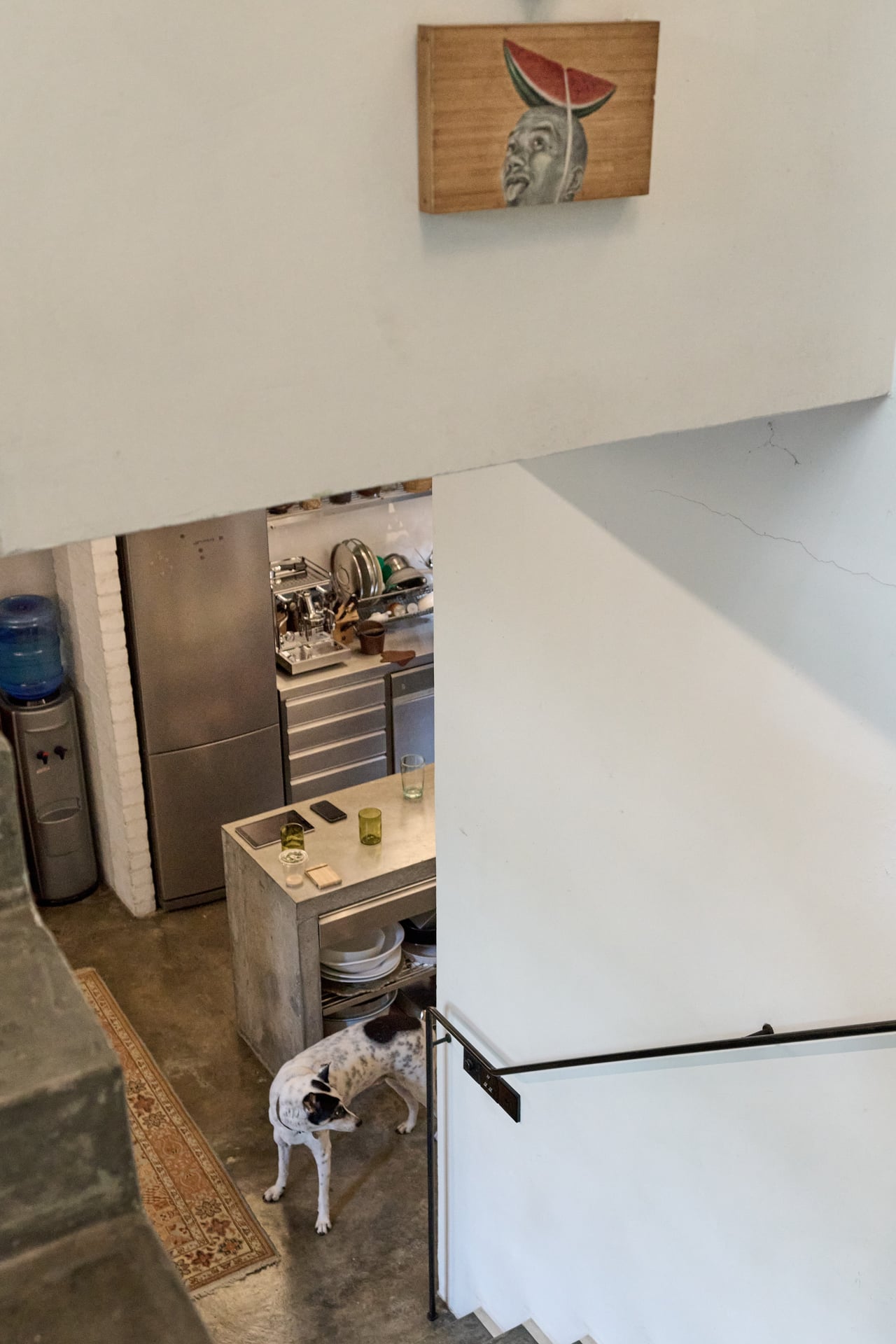
A graphic designer by training, Oon Soon practiced his craft in Europe before returning to Malaysia. These days, he works solo, straddling branding, styling, and visual storytelling. He used to run a studio. Now, he works from home. “There’s no normal day,” he says. “If I want to work, I work. If I don’t, I don’t.
”He used to entertain. A lot. “Friends would come over, stand around the kitchen. I’d try to shoo them away so I could cook, but somehow, they’d always drift back,” he laughs. “Something about this space... it pulls people in.” These days, he still cooks—simple meals, mostly for himself. Salads. Chicken. Pasta. “I don’t eat out much anymore,” he adds, not ruefully, but with the contentment of someone who’s found comfort in a rhythm all his own.
Bentwood chairs from Czechoslovakia wait in anticipation around the dining table to host laughter, celebrate friends, and cradle the kind of conversations that linger long after the plates are cleared.
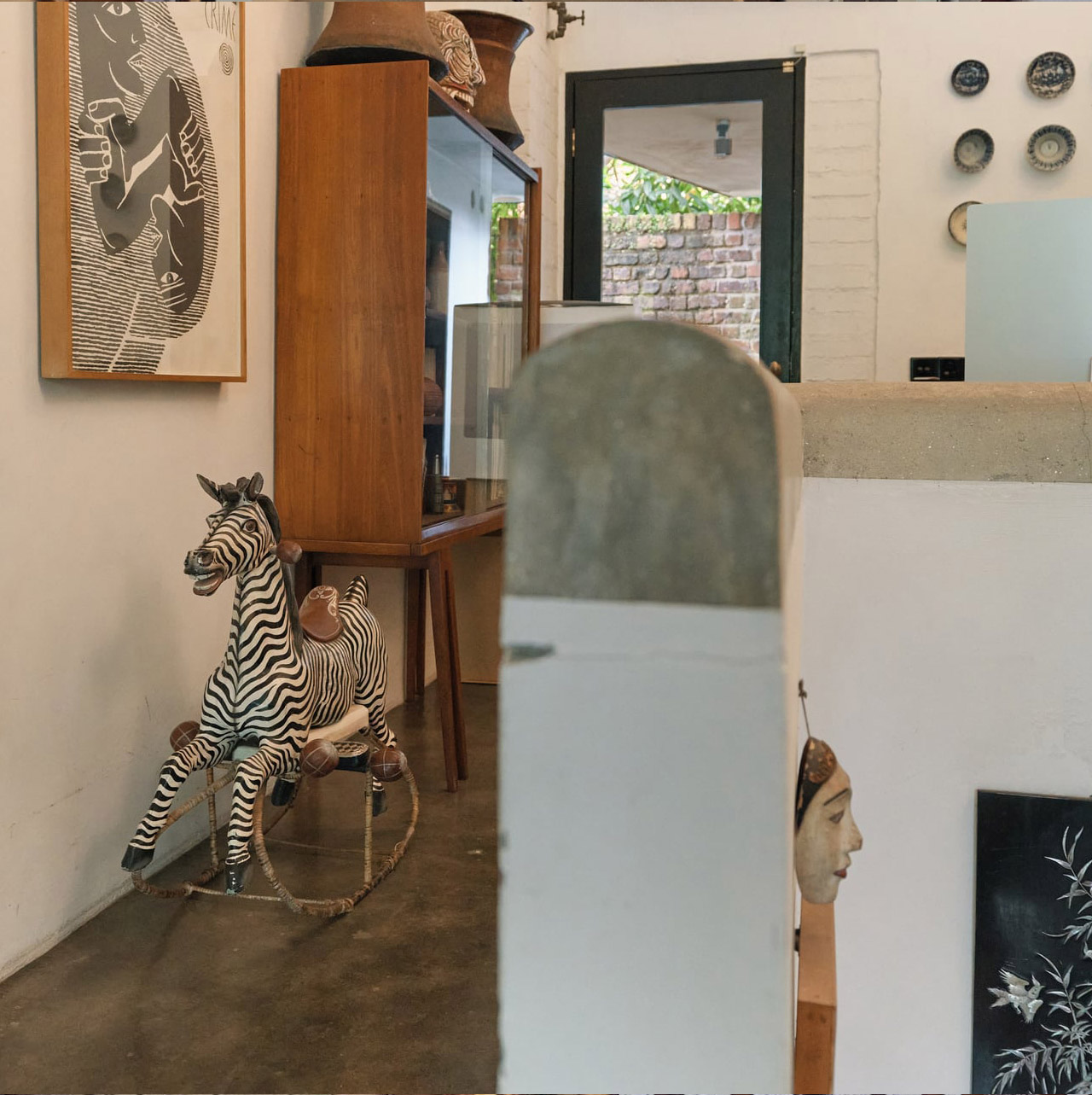
There’s a kind of reverence in how he interacts with things. He touches objects lightly, like they’re sleeping. “This one,” he says, pointing to a canvas leaning against the wall, “was painted by a friend in Cologne. I paid for it in instalments. I didn’t want to let it go.” Another was exchanged for design work. “I said, no need to pay me, just let me have that piece.”
Every object holds not just origin, but resonance. “I think I was meant to live in another era,” he says. When asked which one, he doesn’t hesitate: “The ’40s. Prewar. I should’ve been alive then.” He smiles, wistful. “Maybe it’s the music my mum used to play on the Rediffusion when I was young.”
Oon Soon isn’t trying to be timeless. He simply refuses to be timely. In a design world where trends chase relevance like moths to flame, his ethos is quieter, deeper. To him, design isn’t merely aesthetic, it’s ethical.
You get the sense he isn’t trying to impress anyone. And that’s precisely what makes him feel like a story still unfolding. He doesn’t speak of ambition, or legacy. “When I design, I don’t follow trends,” he says. “It’s not about imposing my personality. It’s about listening.”
Maybe that’s why the house feels so alive. It doesn’t perform. It doesn’t seduce. It listens. And in return, it invites you to do the same. “I don’t go looking,” he says. “I just… notice.” In his voice, there’s no collector’s pride, just the quiet certainty that some stories are meant to be preserved with the integrity they deserve.
And there they rest, on shelves, on tabletops, in corners flooded with light. Some in half-shadow, others basking. None more important than the next. Everything handpicked. Held. Brought home.
“A house is not a museum,” he says. “But it should have memory.” That’s what lingers about Oon Soon. He is tethered to the past and yet completely at ease in the present. He reads books in silence. He visits post offices in foreign cities to buy stamps— “and then I write,” he smiles. “Actual letters. Handwritten with a fountain pen. Like people used to.”
“People always ask me, why old things? Why not new?” He shrugs. “I don’t know. Maybe I don’t like things that are empty of stories.”
Oon Soon doesn’t chase stories; they find him.
In his wanderings, through cities, villages, dusty streets and markets loud with forgotten colour, they catch his eye and reveal a glimpse of their soul. Some veiled with promise. Some frayed. Some crusted with memory, some dimmed by time. As if they’ve been waiting silently.
Like a pied piper of the past, he walks with no grand design. And the old stories, having long outlived other lives, follow him home, drawn to the possibility of a final curtain call. Not to merely be showpieces. But to truly belong. To find rest, at last, in the stillness of his home... among other kindred stories.
Arthouse by Hogen ~ 004 . Word by Theresa Suthen . Photography by Lobach